
Article also available in the following languages:
How to Combine Wood Wall Panels with Lighting and Furniture in Interior Design
A practical guide to warm, balanced interiors using reclaimed wood, thermowood, oak panels, lighting, and furniture.
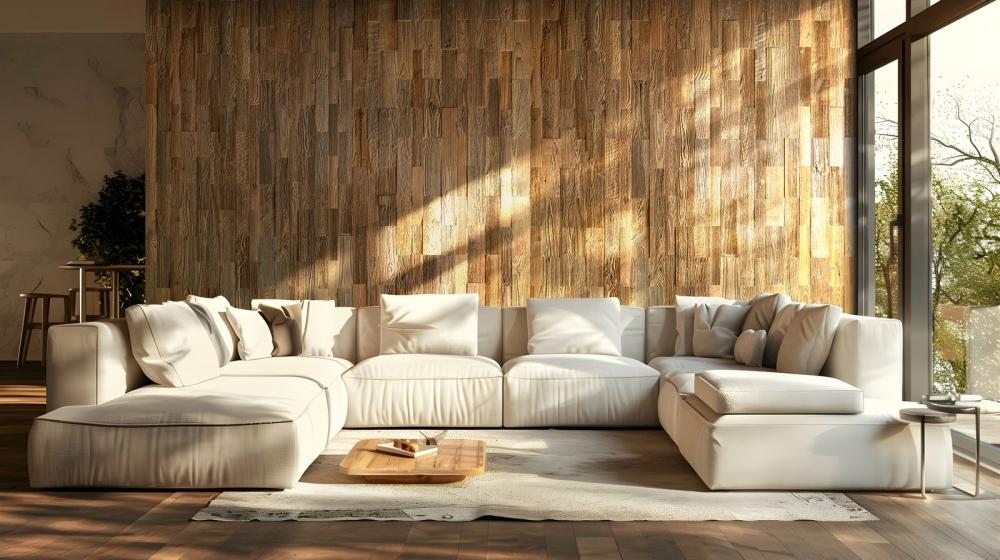
Solid wood wall panels already give a room texture and atmosphere. But interiors that truly look high-end are never built on wood alone. The best rooms combine three elements: the wood, the lighting, and the furniture.
When these work together, the space looks calm, architectural, and considered — not over-decorated.
Quick guide to integrating wood panels
-
Choose warm LED lighting — 2700K to 3000K warm white.
-
Balance textures: pair the wood with linen, soft leather, and matte metal.
-
Create one strong accent wall — don’t cover every wall.
-
Reclaimed wood needs visually calmer furniture; oak handles more variety.
-
Give 3D panels breathing room — no crowded shelves directly next to them.
In this guide we'll cover:
-
how lighting changes the way wood wall panels look
-
which furniture works best with reclaimed wood and oak panels
-
how to style 3D wood wall panels
-
how colour choices interact with wood
-
recommendations for each room
-
and the most common mistakes to avoid
Why lighting matters more than most people think
Wood is not a flat material. Its grain, depth, texture, and colour are constantly reacting to light.
The same reclaimed wood wall can look soft and warm in morning daylight, dramatic in the evening, and deeply structured under LED spotlights. That's why lighting should never be treated as an afterthought when designing interiors with wood wall panels. Good lighting doesn't overwhelm the wood — it reveals it.
Warm light always works best with wood wall panels
For almost every interior, warm light creates the most natural connection with real wood surfaces. The ideal colour temperature is 2700K–3000K warm white.
This kind of light brings out the natural grain pattern, softens shadows, enhances texture, and creates a comfortable atmosphere. Cool white light often makes natural wood look grey, flat, or visually colder — especially with darker wood panels.
Indirect LED lighting creates the most high-end effect
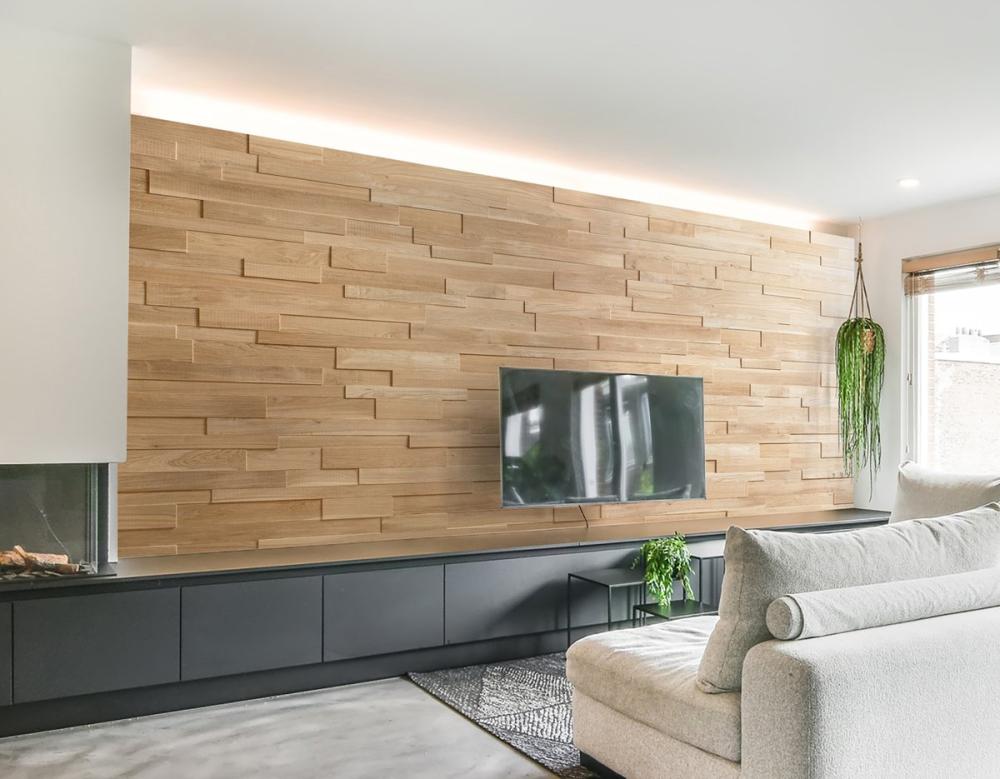
One of the best combinations for modern interiors is solid wood wall panels paired with hidden indirect LED lighting. As you can see in the image below, LED strips concealed behind a ceiling cornice cast a soft, even wash of light across the full width of the panel — revealing every layer of grain and texture without harsh shadow lines.
This works especially well with oak wall panels, reclaimed wood panels, and deeply structured surfaces. The goal isn't brightness — the goal is depth and atmosphere.
Spotlights or general lighting
Both types of lighting serve different purposes. Spotlights are best for highlighting texture, accent walls, and reclaimed wood details — creating a nostalgic evening mood. General lighting provides comfort in bedrooms, living areas, and calm minimalist interiors.
The best interiors usually combine both: general lighting for softness, accent lighting for texture.
Oak wall panels — ideal for modern interiors
Oak wall panels are visually calmer and more structured than reclaimed wood. That makes them highly versatile for Scandinavian interiors, Japandi spaces, warm contemporary homes, minimalist apartments, and architecturally lean interiors.
Light oak wall panels help rooms look brighter, larger, more harmonious, and more open. Darker panels create contrast, sophistication, and a stronger visual frame. Oak pairs especially well with soft fabrics, matte metal, white walls, concrete, matte surfaces, and indirect lighting.
The light oak TV wall above is a strong example of how oak fits into a real living room: the LED light above the panel draws the eye upward, the dark cabinet under the TV anchors the composition, and the neutral sofa sits quietly without competing with the wall.
Reclaimed wood wall panels — choose visually calmer furniture
Reclaimed wood already carries texture, movement, colour variation, and history. That's why furniture around reclaimed wood should generally stay simple and visually clean.
The best pairings are linen fabrics, bouclé textures, matte black steel, soft leather, natural stone, and smoked glass. Overly decorative furniture combined with expressive reclaimed wood often makes a room look visually overloaded. The more character a wall has, the calmer the surrounding furniture should be.
How wood wall panels work with colours
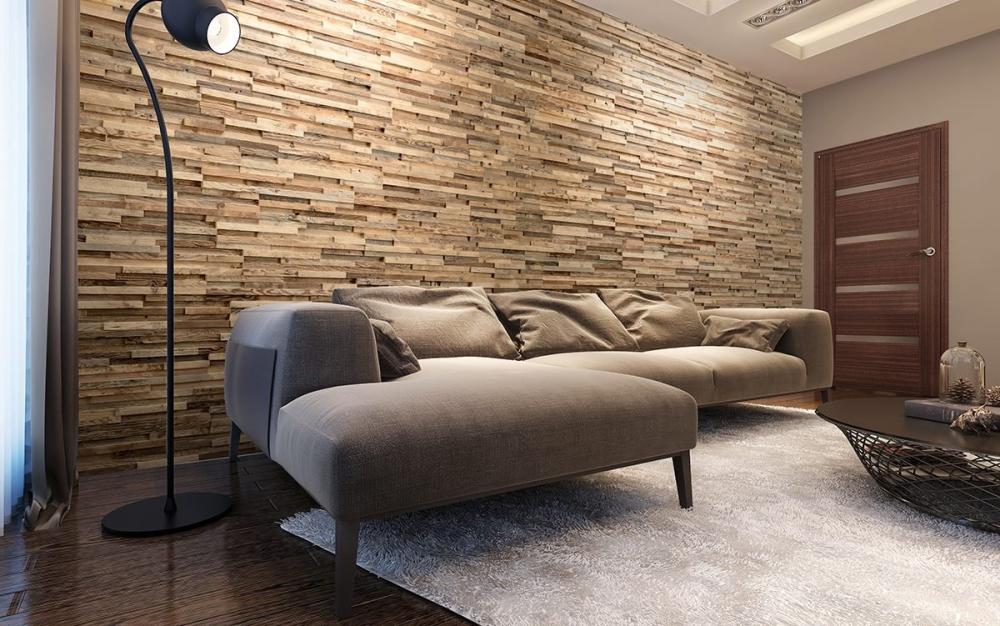
The most important rule is simple: warm wood works best with warm neutral tones. The best colour combinations are beige, sand, cream, taupe, warm grey, anthracite, and matte black.
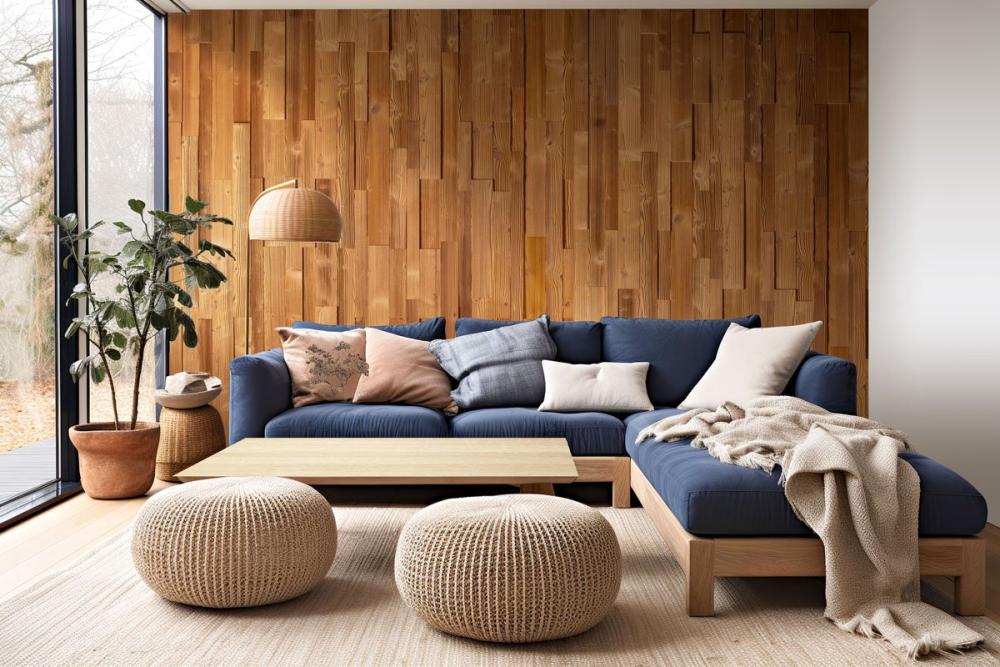
But wood also pairs beautifully with stronger accent colours — as long as the palette stays warm and the fabrics are natural. A deep navy sofa, an oak coffee table, rattan poufs, linen throws, and terracotta pots can sit happily next to a thermowood wall panel. The warmth of the wood anchors the room and keeps the more intense colours from looking sharp.
Very cool whites or glossy surfaces can sometimes make wood look disconnected from the rest of the interior. When in doubt — choose the warmer tone.
3D wood wall panels — give them breathing room
3D wood panels already create movement through shadow, relief, and texture. That means the surrounding interior should stay restrained. Avoid crowded shelves, too much wall decoration, excessive visual layering, and very busy patterns directly next to the wall.
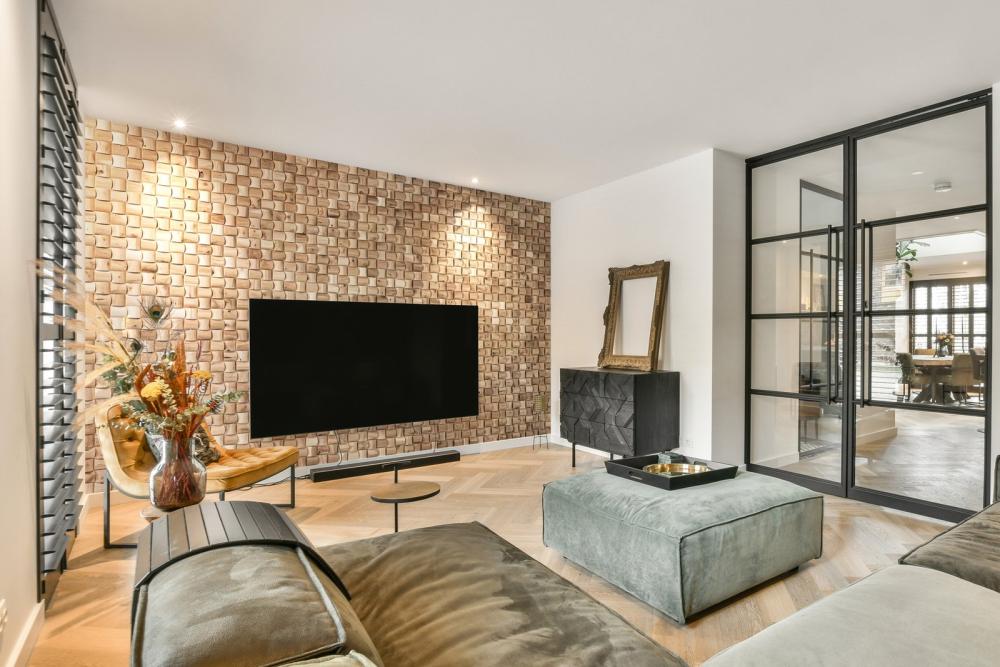
The wood texture itself should remain visible. As you can see in the image below, a 3D wood panel as a TV accent wall works without any additional decor: the panel's natural cubic relief generates enough visual intensity on its own. Lighting from above reveals the shadows between each element of the pattern, turning the wall into the dominant feature of the room — by day and by night.
For high-end interiors, restraint almost always looks more expensive than over-decoration.
Natural materials always work best together
Solid wood interiors look their best when wood is combined with other natural materials: linen, wool, cotton, stone, steel, clay, brass, matte ceramics, and smoked glass. These materials age together naturally and create interiors that stay visually appealing for years.
Recommendations for each room
Living room
Best combination: reclaimed wood or oak accent wall, warm LED lighting, soft textiles, low-profile furniture. Avoid covering every wall with wood — one accent wall is usually enough. A TV integrated into the panel, like in the oak LED example, is one of the most functional and visually strongest solutions.
Bedroom
Wood panels behind the bed create warmth, acoustic softness, and a hotel-style atmosphere. Indirect lighting behind the headboard works especially well and is a practical solution.
Dining area
Oak wall panels pair beautifully with pendant lamps, natural wood dining tables, soft chairs, and matte black details. Warm evening lighting matters most here.
Home office
Wood panels make offices look calmer, quieter, and give them a higher-end studio feel. Oak wall panels combined with indirect lighting create a strong, architecturally clean look without coldness.
Five mistakes to avoid
-
1. Lighting that's too cool. Cool light strips the warmth from wood and makes interiors feel less comfortable.
-
2. Too many competing textures. Reclaimed wood combined with aggressive marble, glossy surfaces, and patterned walls quickly becomes visually chaotic.
-
3. Small decorative items everywhere. Wood walls already contain plenty of pattern detail. Too many accessories weaken the effect.
-
4. Furniture pressed flat against textured walls. Leave visual breathing room so the wood texture stays visible.
-
5. Every wall covered in wood. One strong accent wall looks more elegant than every wall fully clad.
Frequently asked questions
What lighting is best for wood wall panels?
Warm white light from 2700K to 3000K works best, because it enhances the natural warmth and texture of the wood.
Does LED lighting damage wood wall panels?
No. Standard indoor LED lighting produces very little heat and is completely safe for solid wood wall panels.
What furniture style works best with reclaimed wood panels?
Simple modern furniture with soft fabrics and matte finishes lives best alongside reclaimed wood.
Are oak wall panels suitable for small rooms?
Yes. Light oak wall panels can help small rooms look brighter and visually larger.
Do 3D wood wall panels make rooms look smaller?
Not at all. Combined with proper lighting and restrained furniture, 3D panels can add depth and a visual focal point without overwhelming the space.
Do wood wall panels work with saturated furniture colours?
Yes — as long as the palette stays warm. Reclaimed wood and thermowood pair especially well with deep navy, forest green, terracotta, and deep clay tones, balanced by natural textiles.
In short
The best interiors with wood wall panels are built around balance. Natural wood already gives a room warmth, texture, and atmosphere. The role of lighting is to reveal that texture naturally, while the role of furniture is to support the wood, not compete with it.
When these elements come together properly, the result looks timeless, calm, and architectural. That's why reclaimed wood, thermowood, oak wall panels, and 3D panels remain relevant in interiors year after year. If you'd like to see how these panels hold up over decades, take a look at our guide on real wood wall panel care and lifespan.
